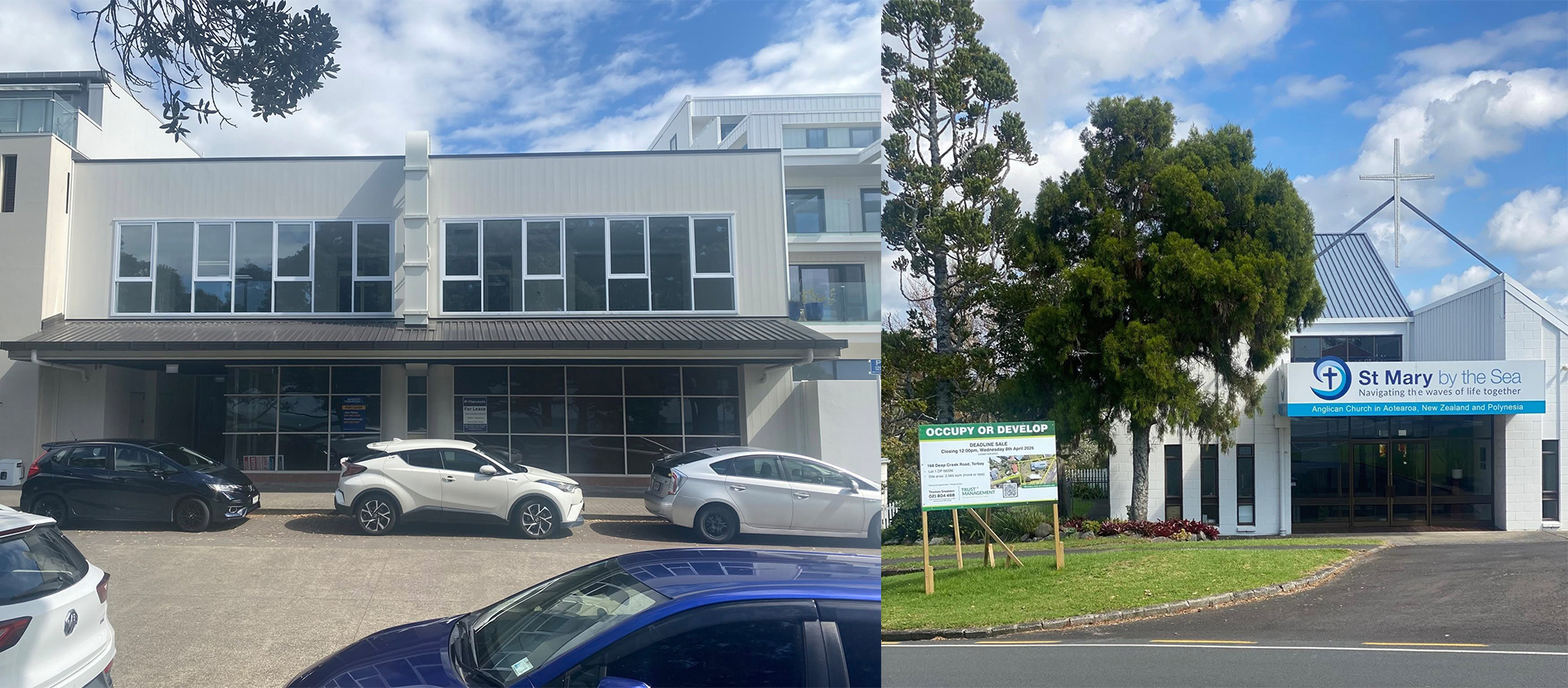
There’s a good chance you’ve driven past a data centre without knowing it. Several already operate on the North Shore, clustered in the business parks around Rosedale and Albany. You wouldn’t notice these facilities, because they’re designed to blend in as plain, windowless warehouses and office blocks.
Suddenly, it seems, data centres have been getting loads of attention as the subject of debate across New Zealand. They’ve become a hot-button topic in politics, cropping up more and more in campaigning this winter ahead of November’s election. The Green Party has called for a pause on building new AI data centres. So what changed, and why now?
What a data centre actually is
At its simplest, a data centre is a large, cooled building full of racks of servers and storage. You can think of it as a place to keep and run the enormous amount of computing that supports everything from your emails to your banking to the streaming you did last night.
The tricky part is heat. All that processing warms everything up, so the real challenge is keeping everything cool. Noise is another issue. Inside, staff often wear ear protection against the combined roar of the server fans and the air conditioning.
Data centres themselves are not new. They have existed in New Zealand since the 1980s, with Telecom (now Spark) among the first companies to set one up. Others followed. Firms like Datacom built larger centres and leased out space to businesses in need of processing power for things like billing systems and event ticketing. For years these centres have sat quietly in the background of daily life.
So why the fuss now?
The quick answer is scale.
The proposed centres at the heart of the argument are AI data centres, built to train and run artificial intelligence models. They are far hungrier for power and water than earlier data centres, and the jump in size is enormous.
A good example of this is Datagrid, a roughly $3 billion facility that’s been consented for Southland. It’s the first of its kind in the country. Once running, it will use 280 megawatts of power, which would make it the second-biggest user of electricity in New Zealand, behind only the Tiwai Point aluminium smelter. It also holds consent to draw up to 600,000 litres of groundwater a day, similar to what a town the size of Kaikoura gets through. The company says it expects to mostly use rainwater, and to cool its computers on a closed loop that recirculates water rather than losing it. Opponents are sceptical of this claim.
Then there’s the question of who benefits. Older data centres served local users and local businesses. An AI centre built to train a model mostly serves an overseas market, which the government has described as a kind of digital export. Detractors feel this amounts to sending profits overseas.
What’s being built
New Zealand already has around 56 data centres, with roughly 20 more planned or under construction. The big international players have arrived too, with both Microsoft and Amazon Web Services now in the country.
Contact Energy and CDC are exploring a 250MW centre in Taranaki, on a similar scale to Datagrid. Closer to home, the Shore cluster keeps expanding, and Spark has gained approval for a new large-scale project, somewhere in the North Auckland area.
The Fast Track Approvals Act
Sitting over much of this discussion is the Fast Track Approvals Act, which passed at the end of 2024. It sets up a permanent fast-track process for infrastructure, housing and development projects the government considers regionally or nationally significant.
In plain terms, it works as a one-stop shop. A company applies to have its project fast-tracked. Then, rather than going through the usual council consent process, the project is assessed by a panel of experts who make the final call.
This is the heart of the debate. The fast-track process can skip the public notification and consultation that a normal consent usually involves. The Datagrid project, for instance, was consented without the public being notified. Some residents there say the largest project of its kind in the country was waved through before anyone thought to ask them.
The case for, and against
Supporters point to the economic upside. The sums involved are large: Invest New Zealand, the agency set up to attract foreign money, is targeting somewhere between $25 and $35 billion in data centre investment over the next five years.
Building the centres creates construction jobs. And the power companies argue that signing a data centre to a long, high-volume electricity contract gives them the certainty they need to commit to new wind and solar projects.
Underneath it all is a “don’t fall behind” argument, that turning investment away too soon leaves the country less competitive.
Critics have a different set of worries. They point to the pressure these centres put on power prices and water supplies, the relatively small number of permanent jobs once construction ends, and the likelihood that profits and data flow offshore with not much staying here.
The politicians split along party lines. National backs new centres, provided they can show what’s called “additionality”, meaning they bring new power to the grid rather than drawing down what’s already there.
Labour is open to them as well, but wants firm tests around energy and water, and stops short of backing a pause. The Greens want a one-year freeze on new consents while the rules get sorted out. Co-leader Chloe Swarbrick has been clear that it’s a pause rather than a ban, while Prime Minister Christopher Luxon has called the proposal “alarmist.”
What it could mean for us
For most households, the everyday stakes come down to two familiar things: the power bill and the water supply.
Some possible rules are already being floated. One is requiring data centres to underwrite their own power supply, as Australia has started doing. Another is insisting on closed-loop cooling to limit water use. With a general election in November, regulation is very much a live issue, so it’s worth paying attention to what each party is promising.
For now, the centres in our own business parks hum along quietly, while the country works out what it wants from the next generation of them.